top of page
Gemini_Generated_Image_221mib221mib221m.png

Learning Math with Albert: Don't Let Math Become a Source of Tears.

Why do so many bright children eventually struggle with math? Because they are pushed into abstract calculations before they truly understand what numbers mean.


Equip your child with a proven 11-level system that builds a rock-solid logical brain from age 3! By transitioning smoothly from colorful, touchable objects to numbers, we make mastering math—from basic counting to multiplication—a natural, tear-free adventure.

🎁 INCLUDES:
Exclusive Access to LMA Digital Games! 

The End of "Rote Memorization" Math

12.png

Concrete Before Abstract

Memorizing without understanding why is the root of math anxiety. We fix this. Using our tactile Magic Numbers Board and Tile Sets, children literally "feel" and visualize quantities before doing mental math. 

13.png

Problem-Solving, Not Just Calculating

Math isn't just for passing school exams. It develops the critical problem-solving and logical reasoning abilities required for doctors, engineers, and every future profession . We teach them how to think, not just what to write. 

Blended Learning in Action

Gemini_Generated_Image_berublberublberu.png

Read & Understand
(Offline Input)

Dive into 11 beautifully illustrated Core Books. Follow Albert and his sister Annie on exciting journeys that cleverly disguise complex math concepts—like spatial coordinates and volume—as fun stories. 

Gemini_Generated_Image_lwcnwilwcnwilwcn.png

Touch & Solve
(Hands-on Mastery)

Move away from the book and onto the Magic Numbers Board! Your child uses physical tiles to visually solve equations. Suddenly, abstract concepts like "carrying up," place values, and multiplication make perfect, visual sense! 

Gemini_Generated_Image_hv7nw5hv7nw5hv7n.png

Play & Reinforce
(Online Output)

Log into the LMA Digital Games. 11 levels of interactive, self-paced games provide instant feedback, making math practice feel exactly like playing their favorite video game .

An 11-Step Journey from Basics to Brilliance

Children usually acquire the ability to compare sizes (the sense of quantity) at an early stage. This is the starting point for arithmetic education. Children will learn how to make comparisons in object size, put objects in order of relative size, and learn different ways to describe them (long, short, deep, shallow, etc.).

Level 1 Which is Bigger?

Children usually acquire the ability to compare sizes (the sense of quantity) at an early stage. This is the starting point for arithmetic education. Children will learn how to make comparisons in object size, put objects in order of relative size, and learn different ways to describe them (long, short, deep, shallow, etc.).

Numbers are used to indicate the size of a collection, such as 3 cats, or 2 apples. Therefore, to understand numbers in this way, one must learn how to group objects of the same kind (to construct a set), and to compare the collections (which is bigger). ​

​
Numbers are used to indicate the size of a collection, such as 3 cats, or 2 apples. Therefore, to understand numbers in this way, one must learn how to group objects of the same kind (to construct a set), and to compare the collections (which is bigger). ​

Level 2 What is a Collection?

Numbers are used to indicate the size of a collection, such as 3 cats, or 2 apples. Therefore, to understand numbers in this way, one must learn how to group objects of the same kind (to construct a set), and to compare the collections (which is bigger). ​

Expains the concept of numbers (1-5) from the concrete objects to the tiles, then to the words for the numbers and finally to the numbers themselves. Also explains the meaning of 0, and the addition and subtraction of numbers 0-5.

​
Expains the concept of numbers (1-5) from the concrete objects to the tiles, then to the words for the numbers and finally to the numbers themselves. Also explains the meaning of 0, and the addition and subtraction of numbers 0-5.

​

Level 3 What are Numbers?

Expains the concept of numbers (1-5) from the concrete objects to the tiles, then to the words for the numbers and finally to the numbers themselves. Also explains the meaning of 0, and the addition and subtraction of numbers 0-5.

Sorting out (separating) and putting together is also known as synthesis and analysis. These are indispensable methods for the proper comprehension and presentation of ideas.

​

​
Sorting out (separating) and putting together is also known as synthesis and analysis. These are indispensable methods for the proper comprehension and presentation of ideas.

​

​

Level 4 Let's Put Things Together

Sorting out (separating) and putting together is also known as synthesis and analysis. These are indispensable methods for the proper comprehension and presentation of ideas.

Helps children understand three-dimensional space (length, width and height) and the directions and relative position of objects within it. This is also an essential concept for everyday life.

​

​
Helps children understand three-dimensional space (length, width and height) and the directions and relative position of objects within it. This is also an essential concept for everyday life.

​

​

Level 5 Let's Spot the Position

Helps children understand three-dimensional space (length, width and height) and the directions and relative position of objects within it. This is also an essential concept for everyday life.

If the numbers up to 5 are understood, then learning the numbers from 6 to 99 is easy. The next objective is the introduction of the number 10. This is the beginning of the study on place value. Take the time to explain this concept as this is often a stumbling block for many children.

Level 6 What are Numbers? (6 to 99)

If the numbers up to 5 are understood, then learning the numbers from 6 to 99 is easy. The next objective is the introduction of the number 10. This is the beginning of the study on place value. Take the time to explain this concept as this is often a stumbling block for many children.

Practicing this is of paramount importance in arithmetic. The aim is to make sure that children clearly understand the principle behind the rules, and that they get enough practice.
​​​

​
Practicing this is of paramount importance in arithmetic. The aim is to make sure that children clearly understand the principle behind the rules, and that they get enough practice.

​​​

​

Level 7 Carrying Up and Carrying Down

Practicing this is of paramount importance in arithmetic. The aim is to make sure that children clearly understand the principle behind the rules, and that they get enough practice.

​​​

To assist in understanding addition and subtractio of three-digit numbers, it is recommended that children practice with the tile set in the Math Kit. To achieve the maximum benefit of the program, it is important that the technique be mastered so that it can be applied to any set of numbers. 

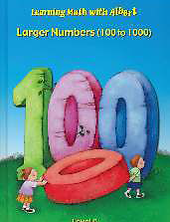
Level 8 Larger Numbers (100 to 1000)

To assist in understanding addition and subtractio of three-digit numbers, it is recommended that children practice with the tile set in the Math Kit. To achieve the maximum benefit of the program, it is important that the technique be mastered so that it can be applied to any set of numbers. 

This level focuses on two examples of continuous quantity, namely, length and liquid level. Neither of these can be described by counting, so we need to include units of measurement. Children will understand the history and the nature of units, and why we need to use them.

​
This level focuses on two examples of continuous quantity, namely, length and liquid level. Neither of these can be described by counting, so we need to include units of measurement. Children will understand the history and the nature of units, and why we need to use them.

​

Level 9 Let's Measure Things

This level focuses on two examples of continuous quantity, namely, length and liquid level. Neither of these can be described by counting, so we need to include units of measurement. Children will understand the history and the nature of units, and why we need to use them.

This is a new computation for children. Children need to understand the meaning and use of multiplication, instead of simply memorizing the multiplication table. The Multiplication Tile Set will be very useful in providing hands-on practice.

​

​
This is a new computation for children. Children need to understand the meaning and use of multiplication, instead of simply memorizing the multiplication table. The Multiplication Tile Set will be very useful in providing hands-on practice.

​

​

Level 10 Let's Do Multiplication 

This is a new computation for children. Children need to understand the meaning and use of multiplication, instead of simply memorizing the multiplication table. The Multiplication Tile Set will be very useful in providing hands-on practice.

In this level, children division as "sharing" or "putting equally". They need to understand the meaning and use of division. This level also introduces a bonus section on problem solving which encourages children to use the concepts learned and skills developed in the program so that they can appreciate better the usefulness of math and to build confidence in the subject.​

Level 11 Let's Do Division 

In this level, children division as "sharing" or "putting equally". They need to understand the meaning and use of division. This level also introduces a bonus section on problem solving which encourages children to use the concepts learned and skills developed in the program so that they can appreciate better the usefulness of math and to build confidence in the subject.​

See the Magic in Action!

Don't just take our word for it. Let your child join Albert and Annie right now and see how quickly they can solve puzzles using our interactive platform.

Play a Free Math Game Now!

Screenshot 2026-07-03 at 17.29.24.png

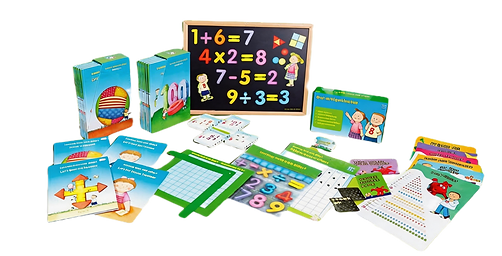
Everything You Need to Build a Math Genius

  • 11 Hardcover Core Books & 11 Activity Books

  • Magic Numbers Board

  • Multiplication Tile Set, and Practice Cards

  • 6 Walterized Posters & Sticker Book

+ Full Access to 11 Levels of LMA Digital Games!

Next time they encounter a difficult problem, they won't say "I can't." They'll grab their tiles and figure it out. Give them the gift of logical thinking today.
3_edited.png
bottom of page